

Fifty years ago today, on November 21, 1976, a small boxing film with no stars and almost no budget premiered in New York City. Rocky went on to win the Oscar for Best Picture and change movies forever. This month the anniversary has become a full-blown season: on November 13, exactly 570 people in grey sweatsuits and knit caps packed the Philadelphia Museum of Art steps to set a Guinness World Record, and a new film, I Play Rocky, has just expanded into theaters nationwide to tell the stranger-than-fiction story of how Rocky almost never got made. It is the kind of tale our entertainment explainers exist for: part film history, part fashion time capsule, part lesson in refusing to sell out.
A Film About the Fight to Make the Fight Film
I Play Rocky is a biographical drama directed by Peter Farrelly, the filmmaker behind Green Book, and written by Peter Gamble. It follows Sylvester Stallone in the early 1970s: broke, sleeping rough in New York, grabbing any acting work he could get, and slowly realising nobody was going to hand him his break. He would have to write it himself.
The film premiered at the Toronto International Film Festival on September 12, 2026, finishing as runner-up for the People’s Choice Award, then opened in a handful of US theaters on November 6 through Amazon MGM Studios. Word of mouth did the rest: the release quadrupled its theater count within two weeks, and on November 20 it expanded nationwide — one day before the 50th anniversary of the original film’s premiere. Some anniversaries are just marketing. This one feels earned.
The True Story — and the Parts That Wobble
The bones of the legend are documented, and I Play Rocky tells them straight. In March 1975, Stallone watched journeyman boxer Chuck Wepner survive fifteen rounds against Muhammad Ali, and the idea landed. By his own account he let it sit for months, then wrote the first draft of Rocky by hand in three and a half days — his wife Sasha typing up the pages — when he reportedly had about $106 in the bank.
Then came the offers. Producers Robert Chartoff and Irwin Winkler loved the script but wanted a star: Ryan O’Neal, Burt Reynolds and James Caan were the names in play. Stallone refused to sell unless he played Rocky himself. Contemporary reporting put the top bid near $275,000; in his memoir The Steps, Stallone says the offers climbed to $360,000. Either way, a man with almost nothing walked away from a fortune, and United Artists let him star — on a slashed budget, with the right to replace him if filming fell behind.
Other famous details are softer. Stallone really did sell his dog, Butkus, outside a 7-Eleven for $40 when he could no longer afford to feed him, and he really did buy him back — but the buy-back price changes with every telling, from $3,000 to $15,000. I Play Rocky also compresses timelines and invents a composite studio executive, played by Tracy Letts. None of that sinks it. It just helps to know which parts are history and which are Hollywood.

The Unknown Who Became Stallone
Casting a young Stallone meant finding someone who could carry the voice, the slouch and the stubbornness without sliding into impersonation. The I Play Rocky production found Anthony Ippolito, a 27-year-old New Yorker whose biggest credit was playing a young Al Pacino in The Offer. He sent in an unsolicited audition tape — an underdog move worthy of the subject — and casting director Rick Montgomery has said Stallone himself, who held final approval, recognised the right man when he saw it. Ippolito then gained close to 40 pounds and drilled the distinctive drawl until it sounded lived-in rather than copied. The rest of the cast plays almost entirely real people:
Was Stallone involved in I Play Rocky? Honestly, it depends who you ask. In 2025 he said publicly that nobody had consulted him. Farrelly maintains he had Stallone’s blessing, and Entertainment Weekly reports the star blessed the film without taking a direct role. What is not in dispute is the reaction: Page Six reported the finished film left Stallone in tears.
| Actor | Plays |
|---|---|
| Anthony Ippolito | Sylvester Stallone |
| AnnaSophia Robb | Sasha Czack, his first wife |
| Matt Dillon | Frank Stallone Sr., his father |
| Stephan James | Carl Weathers (Apollo Creed) |
| Jay Duplass | John G. Avildsen, director of Rocky |
| Toby Kebbell and P.J. Byrne | Producers Robert Chartoff and Irwin Winkler |
| Kiki Seto | Talia Shire (Adrian) |
What Critics and Audiences Are Saying
Reviews lean warm. On Rotten Tomatoes, I Play Rocky holds an 88% score from 158 critics, and audiences polled by CinemaScore gave it a rare A+ — the top grade the industry treats as a word-of-mouth rocket. Metacritic is cooler at 68 out of 100, and the dissent is genuine: Screen Daily dismissed I Play Rocky as a sentimental pastiche that recreates famous scenes instead of finding new feeling in them. Variety’s Owen Gleiberman landed firmly on the other side.
“The pleasure of I Play Rocky is that it understands the karmic way in which the story of Rocky was echoed in the saga of how Stallone got the movie off the ground.” — Variety
To date, I Play Rocky has grossed about $8.2 million worldwide (about $4.9 million of it in North America) — modest money, built the old-fashioned way, on audiences telling other audiences to go. If you enjoy films that look back at how films get made, our Sunrise on the Reaping review digs into another franchise examining itself, and our Patrick Stewart explainer covers a very different kind of screen legacy.
I Play Rocky at a glance
Director: Peter Farrelly · Writer: Peter Gamble · Starring: Anthony Ippolito · US release: limited November 6, nationwide November 20, 2026 · Distributor: Amazon MGM Studios · Streaming: no date announced yet
The Rocky Look Never Actually Left
Fashion is where this story gets quietly remarkable. Rocky’s training outfit — a grey hooded sweatsuit, a knit cap, black high-top sneakers — was never designed to be iconic. It was simply what a broke fighter in 1976 Philadelphia would actually wear, and fifty years later that ordinariness is the whole point. At the November 13 record attempt, organisers enforced a strict costume standard — grey hooded sweatsuit, knit cap, black high tops — and Converse handed out 500 pairs of Chuck Taylors so the crowd would match. Five hundred and seventy Rockys later, the record was official: arguably the largest fashion tribute in film history, built from three items anyone can afford.

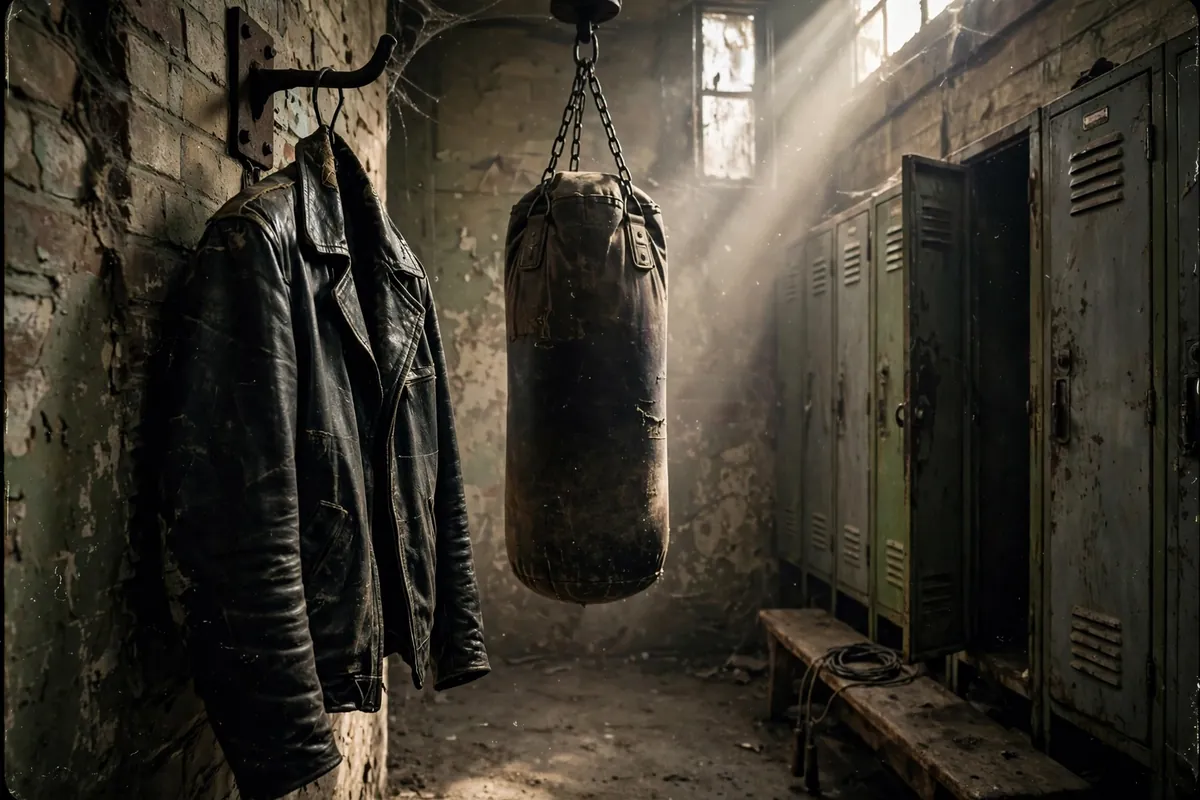
The other half of the look is the black leather jacket Rocky wears through the Philadelphia streets — the off-duty uniform of every 1970s working-class hero, and a big part of why iconic movie leather jackets still anchor wardrobes today. Between the sweatsuit and the jacket, Rocky quietly wrote the template for screen style that looks like real life — and I Play Rocky, recreating the 1976 wardrobe piece by piece, is a two-hour reminder of how much of that style we still wear.
However you come to I Play Rocky — for Stallone, for the nostalgia, or for the sweatsuit — this is a good weekend to be a Rocky fan. You will find more explainers like this one on the Current Affiars homepage.
Frequently Asked Questions
When did I Play Rocky come out?
It premiered at the Toronto International Film Festival on September 12, 2026, opened in limited US release on November 6, and expanded to theaters nationwide on November 20, 2026. No streaming date has been announced yet.
Who plays the young Sylvester Stallone?
Anthony Ippolito, a 27-year-old actor from New York, in his first leading role. He previously played a young Al Pacino in the Paramount+ series The Offer, and he gained nearly 40 pounds to play Stallone.
Is I Play Rocky a true story?
The core of it is documented: the three-and-a-half-day script, the refused offers and the sold-and-recovered dog all happened. Some details are compressed or disputed — the exact offer amounts and the price Stallone paid to buy Butkus back differ between accounts — and one studio executive in the film is a composite character.
Did Sylvester Stallone approve of the film?
He was not directly involved in making it. Stallone said in 2025 that he had not been consulted; director Peter Farrelly says he had Stallone’s blessing, and reports after the premiere described Stallone being moved to tears by the finished film.