
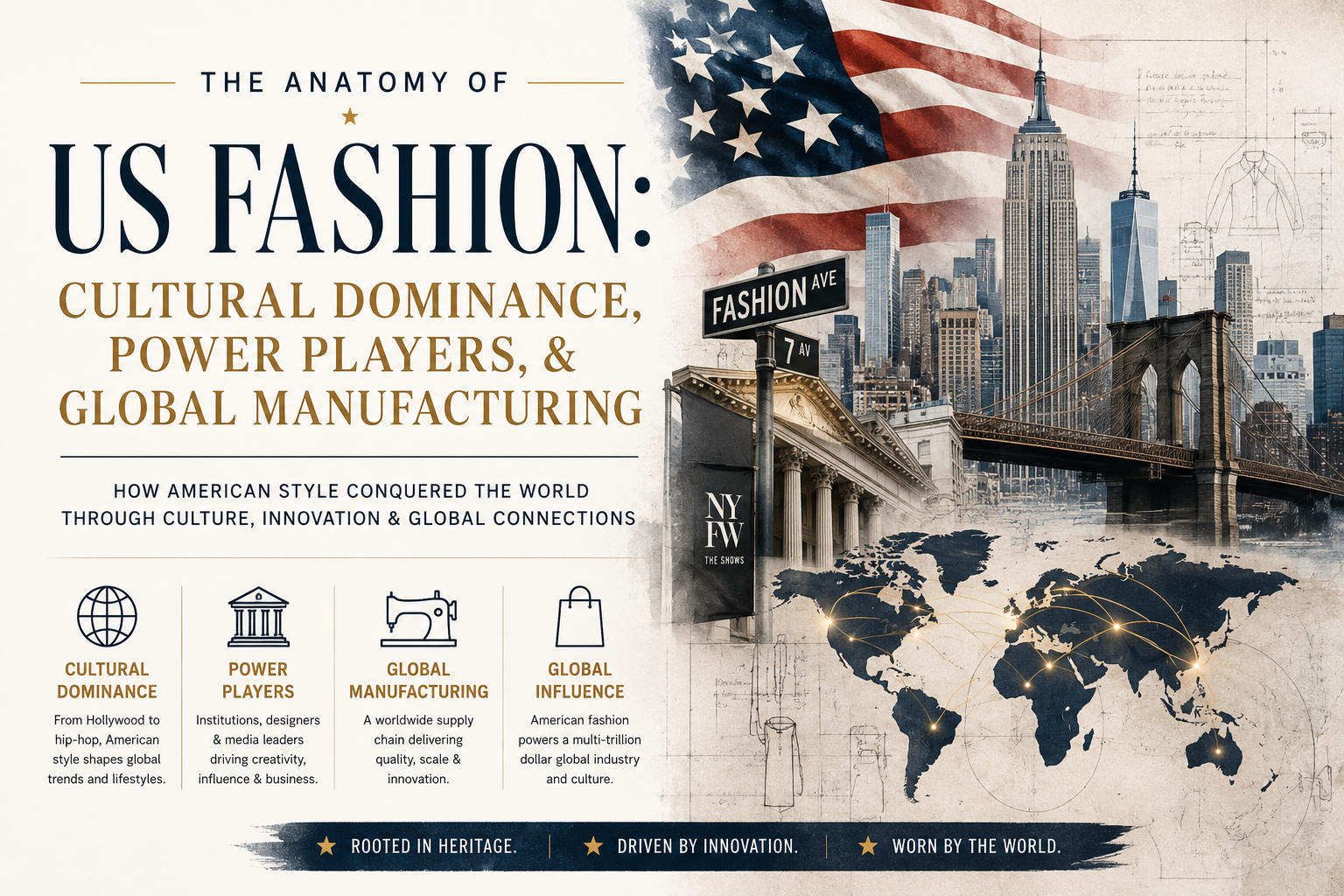
Long before modern street style dominated the globe, fashion was an exclusive, aristocratic playground locked inside the gilded halls of Paris, Milan, and Rome. For centuries, French couture houses held an overwhelming influence over luxury fashion, creating handcrafted garments primarily for royalty, aristocrats, and wealthy elites. Fashion emphasized craftsmanship, etiquette, and exclusivity, making it largely inaccessible to ordinary people.
Then the United States transformed the industry. Rather than competing directly with European couture, America redefined what fashion could represent—functionality, accessibility, and cultural identity.
The Capitalist Masterstroke: Fashion for the 99%
One of America’s greatest contributions to fashion was making style accessible to everyday people. Instead of focusing solely on luxury, American manufacturers and entrepreneurs recognized that the largest opportunity lay in producing durable, affordable clothing for workers, farmers, miners, factory employees, and cowboys.
Workwear such as denim jeans, cotton T-shirts, leather boots, and rugged jackets gradually evolved into global fashion staples. Advances in industrial manufacturing, standardized sizing, and large-scale production helped make fashionable clothing available to millions rather than a privileged few.
This shift fundamentally changed the global fashion industry, proving that practical clothing could also become culturally influential.
Hollywood: The Cultural Engine Behind American Fashion
Manufacturing alone could not create worldwide demand. Hollywood became the storytelling engine that gave American fashion emotional value.
The Working-Class Hero
Films featuring mechanics, soldiers, ranchers, and everyday workers helped elevate denim and workwear beyond their practical origins. Blue jeans became symbols of authenticity and independence.
The Action Hero
Characters portrayed by actors such as Tom Cruise in Top Gun popularized aviator jackets and military-inspired outerwear. These garments came to represent confidence, adventure, and courage rather than simply protection from the weather.
The Iconic Rebel
Performances by Marlon Brando in The Wild One and Harrison Ford in the Indiana Jones series further established leather jackets and rugged outerwear as timeless symbols of individuality and exploration.
European Couture
        ↓
American Industrial Innovation
        ↓
Hollywood Storytelling
        ↓
Global Fashion Influence
Today, many consumers searching for American fashion jackets or classic leather jackets are drawn not only to the products themselves but also to the cultural stories attached to them.
Origins of American Denim
American fashion owes much of its identity to the invention of blue jeans.
Levi Strauss and the Copper Rivet Innovation
During the California Gold Rush, durable clothing became essential for miners and laborers. Levi Strauss partnered with tailor Jacob Davis to reinforce denim trousers using copper rivets at points of high stress, creating garments that lasted significantly longer than traditional work pants.
This innovation laid the foundation for what would become one of the world’s most recognizable clothing categories. Today, denim remains among the most widely worn garments across every continent.
The American Look
During the 1940s, designer Claire McCardell introduced practical, comfortable womenswear that emphasized mobility and simplicity. Her work helped define the relaxed aesthetic later recognized internationally as the “American Look.”
Institutions That Shape American Fashion
Leading Design Schools
- Fashion Institute of Technology (FIT), New York — internationally recognized for fashion business, merchandising, textiles, and design.
- Parsons School of Design, New York — one of the world’s leading design schools, educating numerous influential designers.
Industry Organizations
- Council of Fashion Designers of America (CFDA) supports American designers and helps organize New York Fashion Week.
- Fashion publications such as Vogue continue influencing global consumer preferences and trend forecasting.
Market Size and Economic Impact
| Metric | Estimated Value | Industry Outlook |
|---|---|---|
| Global apparel and fashion market | Approximately $1.8 trillion | Continued long-term growth |
| United States fashion market | Approximately $370 billion | Strong expansion through digital commerce |
The United States remains one of the world’s largest fashion markets and continues expanding through international e-commerce and direct consumer engagement.
The Modern Global Reach: Cross-Border & D2C Dominance
The digital era has transformed how American fashion reaches consumers worldwide.
Direct-to-Consumer (D2C) business models allow brands to sell directly through their own websites, reducing reliance on traditional retail intermediaries. Combined with international fulfillment networks, transparent sizing systems, and localized payment options, customers around the world can purchase authentic American products more easily than ever before.
Whether buying heritage denim, workwear-inspired clothing, or premium leather outerwear, international shoppers increasingly access American brands through borderless e-commerce platforms.
Current Affiars & Global Trends Brief
Stay ahead of the curve with our quick snapshot of today’s top updates across key global industries:
- 📈 Global Business & Retail Logistics: Cross-border supply chains are witnessing a massive shift toward AI-driven inventory optimization. Direct-to-consumer (D2C) brands are leveraging automated micro-warehouses to reduce international delivery times by up to 40%. [Source: Business Outlook]
- ✈️ World Travel & Cultural Hubs: Experiential tourism is surging, with international travelers favoring heritage fashion capitals and historic trade routes. Top destinations this season emphasize immersive cultural tours, sustainable eco-lodges, and luxury shopping districts.
- 🎬 Entertainment, Cinema & Pop Culture: Major Hollywood studios are leaning heavily into cinematic nostalgia, driving global fashion and merchandise demand. Iconic movie wardrobes and high-octane action aesthetics continue to dictate what trends go viral across digital platforms. [Source: Hollywood Insider]
- 🎃 Upcoming Seasonal Celebrations & Halloween Trends: As major holiday seasons approach, global buyers are searching for authentic cinematic costumes and vintage leather outerwear. Demand for high-quality, movie-inspired character apparel is hitting record highs ahead of fall festivals. [Source: Festival Radar]
- 🌿 Health, Wellness & Lifestyle Tech: Ergonomic apparel and non-toxic, eco-friendly fabric processing are taking center stage in daily lifestyle choices. Modern consumers are increasingly prioritizing sustainable materials that offer both physical comfort and durability.
- 💼 International Trade & Economic Policy: Recent tariff restructuring across major export corridors has empowered independent digital storefronts to ship goods internationally with greater tax transparency and streamlined border customs.
Frequently Asked Questions
How did American fashion become globally influential?
American fashion combined practical clothing, industrial manufacturing, and Hollywood storytelling to create products that appealed to consumers worldwide.
Why did American fashion become more popular than traditional European couture?
European couture focused primarily on luxury markets, while American fashion emphasized affordability, durability, and everyday wear, making it accessible to a much larger audience.
What role did Hollywood play in American fashion?
Hollywood associated clothing with memorable characters and lifestyles, helping transform denim, leather jackets, and military-inspired apparel into cultural icons.
Why are denim jeans considered an American innovation?
Levi Strauss and Jacob Davis introduced copper-riveted denim work pants that significantly improved durability, creating the foundation of modern blue jeans.
How do American fashion brands serve international customers today?
Many brands use Direct-to-Consumer websites, international shipping, localized checkout systems, and global logistics networks to reach customers directly.
Why does American fashion continue to influence global trends?
Its combination of innovation, cultural storytelling, practical design, and digital commerce allows American fashion to remain relevant across generations and international markets.
Disclaimer: Historical references, market estimates, and industry observations presented in this article are based on publicly available research, trade associations, academic sources, and industry reports. Figures may vary between reporting organizations.
Upgrade your style game with iconic movie fashion from American Fashion Jackets
Upgrade your style game with iconic movie fashion from American Fashion Jackets Stand out effortlessly in the classic, bold look of the The Dark Knight Joker Purple Suit Of Heath Ledger Crafted with fine attention to detail, it delivers unmatched comfort and a flawless fit. Make a unforgettable statement at any party or event with this timeless villain masterpiece.
Crafted with fine attention to detail, it delivers unmatched comfort and a flawless fit.
Make a unforgettable statement at any party or event with this timeless villain masterpiece.