
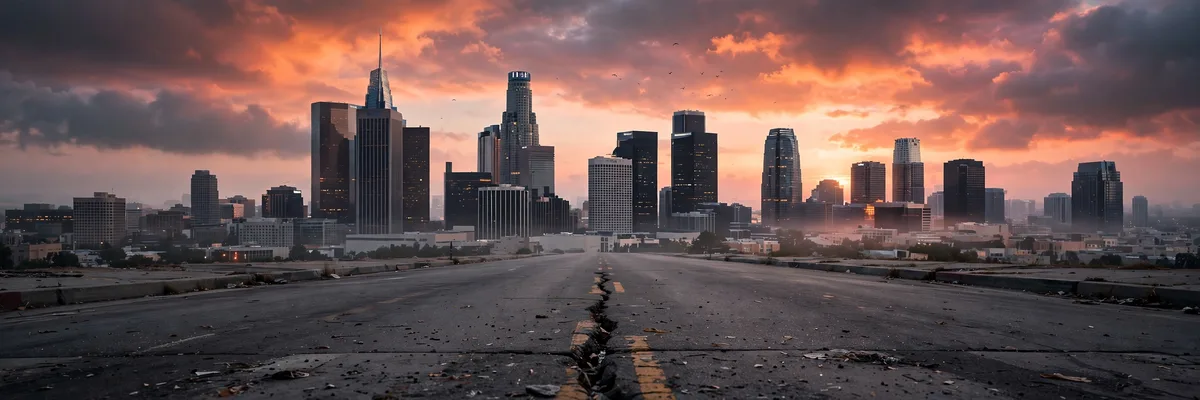
A magnitude 4.4 Los Angeles earthquake woke the city before dawn on Friday, November 20, shaking homes across the Los Angeles basin and sending the fire department into its full earthquake response — just hours after a stronger quake had rattled California’s Central Coast. The tremor struck at 3:25 a.m. Pacific time near Commerce, about five miles southeast of downtown Los Angeles. There were no immediate reports of major damage or serious injuries, but the jolt was widely felt, and officials spent the morning checking bridges, buildings and water lines while warning residents to expect aftershocks.
What happened in the Los Angeles earthquake
According to the U.S. Geological Survey, the Los Angeles earthquake struck at 3:25 a.m. on Friday, November 20, 2026, with its epicenter about one mile northwest of Commerce, near East Los Angeles. The quake was measured at a depth of about 10.6 miles (17 kilometres). Early automated readings put the magnitude at 4.2, but seismologists at the USGS and Caltech revised it to 4.4 after reviewing the data — a normal process, since the first numbers from seismic networks are always preliminary and can be revised again as more data comes in.
The shaking was felt across a wide area. More than 7,500 people submitted reports to the USGS “Did You Feel It?” system within the first hour, describing shaking from Pasadena and North Hollywood to Gardena, Riverside, Long Beach and Calabasas. In Commerce itself, and in nearby Whittier and the San Gabriel Valley, the shaking was strong enough to wake sleeping residents and rattle shelves — which is exactly what a shallow magnitude 4.4 quake near a dense city does.
A second quake hours earlier: California’s busy night
The Los Angeles earthquake was the second significant tremor to hit California in less than five hours. At about 10:50 p.m. on Thursday, November 19, a magnitude 5.1 earthquake struck near Soledad in Monterey County, close to Pinnacles National Park, at a depth of about four miles. It was preceded by two smaller tremors, measured at 3.1 and 3.3.
The two quakes struck more than 250 miles apart, on different fault systems, and early coverage reported no major damage from either. That distance matters: aftershocks cluster around the original rupture, so the Commerce quake was not an aftershock of the Monterey County one. California simply had a busy seismic night — the kind of coincidence that reminds the state how many active faults it sits on.
Damage, disruption and the official response
The Los Angeles Fire Department activated its earthquake response protocol within minutes, placing all 106 neighbourhood fire stations on earthquake mode and sending crews to survey bridges, freeways, dams, hospitals and other critical infrastructure across the city’s 470-square-mile jurisdiction. The department said the survey typically takes less than an hour, and that its early checks found no structural damage or injuries.
At Los Angeles International Airport, officials reported no immediate damage or operational impacts, and flights continued. For a city heading into the busiest travel week of the year — Thanksgiving is six days away — that was the detail many travellers were watching. Our guide to Thanksgiving travel 2026 explains which days will be the most crowded at the airport and on the roads.
Still, officials urged residents not to shrug the quake off. Aftershocks are possible after any earthquake, and the fire department asked people to prepare for the possibility of more shaking in the hours and days ahead.
Why earthquakes are so common in California
California sits on the boundary between the Pacific Plate and the North American Plate, two slabs of the Earth’s crust that are constantly grinding past one another. When the stress along a fault overcomes friction, the fault slips — and that sudden release of energy is an earthquake.
The San Andreas Fault is the best known of the state’s fault systems, stretching roughly 800 miles and marking the main plate boundary. But it is far from the only one: California has hundreds of active faults, including the Hayward, Calaveras, San Jacinto and Elsinore systems. That is why two quakes of this size can strike on the same night without either being unusual.
Can earthquakes be predicted? And what should you do when one hits?
No — and the USGS is blunt about it. Scientists cannot currently predict earthquakes with enough precision to say when a major quake will happen, where it will strike or how large it will be, and there is no expectation that reliable prediction will become possible in the near future. What California does have is early warning: seismic sensors detect a quake as it begins and push alerts through Wireless Emergency Alerts, Android alerts and the MyShake app, giving people seconds of notice before the strongest shaking arrives.
When shaking starts, officials recommend the same three steps everywhere: Drop to your hands and knees, Cover your head and neck under a sturdy table or desk, and Hold On until the shaking stops. Stay indoors rather than running outside while the ground is moving, and if you are in a coastal area, be aware of tsunami hazards after a strong quake. People who felt Friday’s tremor can help scientists by reporting what they experienced through the USGS’s “Did You Feel It?” system, which maps shaking intensity street by street.
Frequently Asked Questions
How strong was the Los Angeles earthquake?
The Los Angeles earthquake measured magnitude 4.4, striking at 3:25 a.m. Pacific time on Friday, November 20, 2026. Its epicenter was about one mile northwest of Commerce, near East Los Angeles, at a depth of about 10.6 miles. Early automated readings put it at 4.2 before seismologists at the USGS and Caltech revised the figure to 4.4.
Was anyone hurt, or was there damage from the earthquake?
There were no initial reports of structural damage or injuries, according to the Los Angeles Fire Department. All 106 of the city’s fire stations went into earthquake mode to survey bridges, freeways and other critical infrastructure, and Los Angeles International Airport reported no immediate damage or operational impacts.
Will there be aftershocks after the Los Angeles earthquake?
Aftershocks are possible after any earthquake, and the Los Angeles Fire Department urged residents to stay prepared for more shaking in the hours and days ahead. The USGS aftershock forecast put the chance of at least one magnitude 3 or larger aftershock within a week at 51 percent, with a 10 percent chance of a magnitude 4 or larger. Aftershocks usually cluster near the original epicenter and tend to shrink in size and frequency over time. If one hits, officials advise the same guidance: drop, cover and hold on until the shaking stops.
Was the Los Angeles earthquake connected to the 5.1 quake near Monterey County?
No. The two quakes struck more than 250 miles apart, on different fault systems, about five hours apart — a magnitude 5.1 near Soledad in Monterey County at about 10:50 p.m. on Thursday, then the magnitude 4.4 near Commerce at 3:25 a.m. on Friday. The Commerce quake was not an aftershock; the two events were a coincidence on a seismically busy night.