
Why It’s Sparking Debate
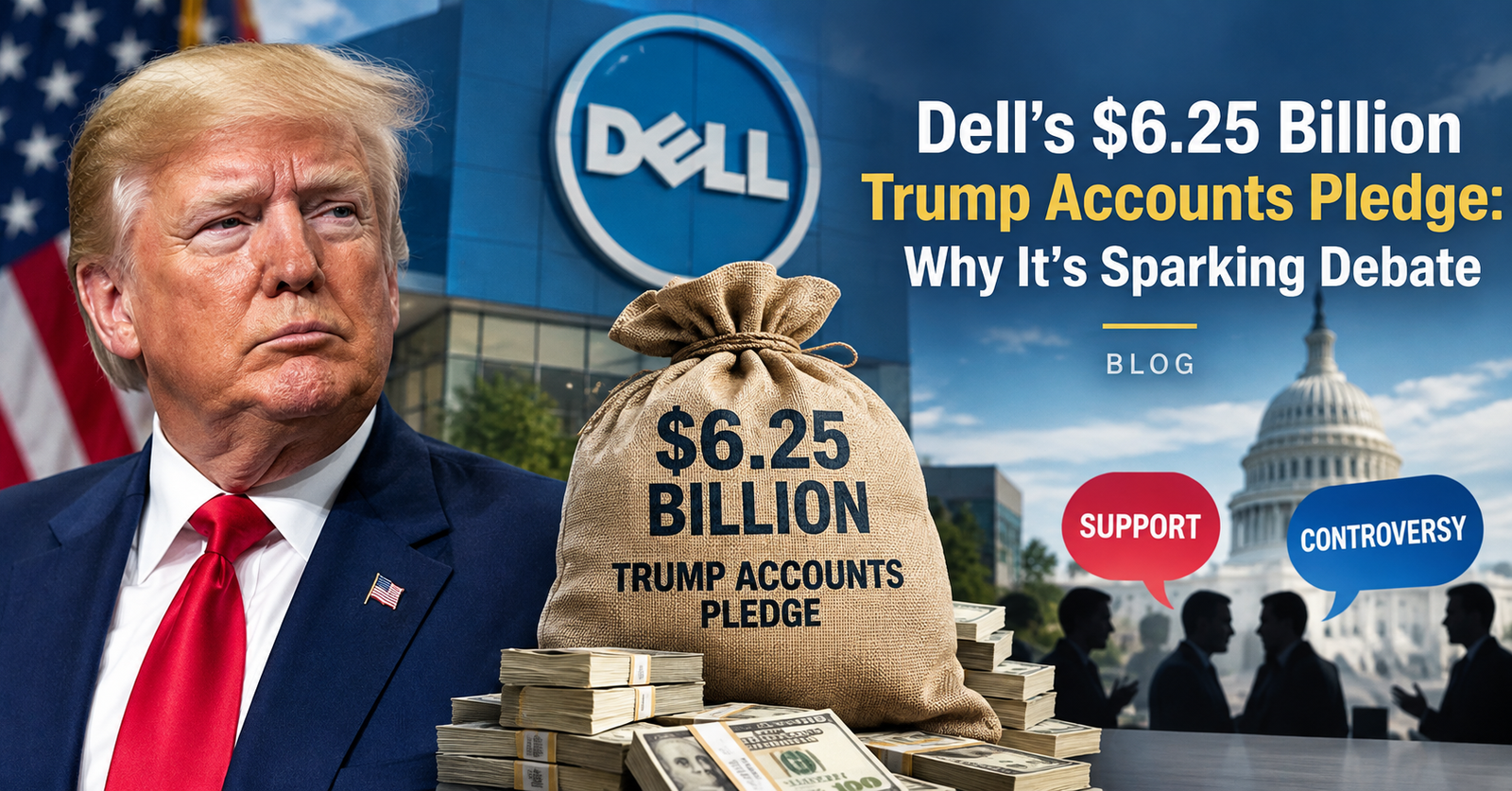
When Susan Dell appeared alongside President Donald Trump at the White House, Michael and Susan Dell announced a $6.25 billion pledge to fund contributions to “Trump Accounts” for millions of children. The announcement drew wide media attention and left many readers asking how the accounts work, who qualifies, and what the pledge means.
This guide separates verified program details from analysis, so you can see where the facts end and the debate begins.
What Are Trump Accounts?
- Federal seed: Children born from January 1, 2025 through December 31, 2028 qualify automatically for an account with an initial $1,000 government contribution.
- Family contributions: Parents, relatives, friends and employers can add money. Reporting indicates an annual limit of $5,000, with contributions starting July 4, 2026.
- Tax treatment: The accounts are generally described as working like a traditional IRA, meaning growth is typically tax-deferred rather than tax-free, and withdrawal rules apply. Check the IRS guidance for current details.
What Does the Dell Pledge Actually Do?
The Dells pledged $6.25 billion to create about 25 million additional accounts seeded with $250 each. These accounts are aimed at children who missed the cutoff for the $1,000 federal seed, so this is a separate group, not an extra $250 added on top of the $1,000.
Eligibility is based on location, not on a family’s individual income. Children living in ZIP codes with a median family income below $150,000 were announced as the first to receive funds. Thresholds and rules can change, so check Invest America’s official page for the current criteria.
This is a personal commitment by Michael and Susan Dell, not a donation from Dell Technologies as a company.
A Meaningful Boost, With Limits
A $250 deposit is a modest head start. How much it grows depends on the child’s age and how long the money stays invested. It works best as a seed amount, not a complete savings plan.
Where Philanthropy Meets Public Policy
The pledge has also sparked a wider debate among commentators and policy analysts:
- Should large private gifts help fund government-backed programs?
- How do big donations affect personal and corporate reputation?
- Does private wealth gain outsized visibility or influence over public policy?
Supporters say private money can fill real gaps and reach families quickly. Critics argue that large gifts can buy goodwill and blur the line between charity and politics. No evidence in the sources reviewed shows that the pledge influenced any contract, regulation or tax outcome, and questions about motive should remain questions unless evidence supports them.
Historical Parallels
The debate over billionaire giving is not new. In each case below, the motive remains a matter of interpretation, not proven fact.
Bill Gates and Microsoft. In the late 1990s, Microsoft faced a major U.S. antitrust case. The Bill & Melinda Gates Foundation was established in 2000 and became one of the world’s largest charitable funders, focused on global health and education. Some commentators argue Gates’s public image shifted from business rival to philanthropist around this time, but there is no documented evidence that the foundation influenced the case.
Elon Musk, SpaceX and Tesla. These are separate companies. SpaceX holds significant NASA contracts, and Star link has been supplied in emergencies and conflict zones. Supporters see useful public-private innovation, while critics question how reliant governments have become on one private firm. Contract awards are a separate matter from charitable giving.
Andrew Carnegie and John D. Rockefeller. Carnegie funded public libraries and argued in The Gospel of Wealth (1889) that the rich have a duty to give. The Rockefeller Foundation was founded in 1913, after years of criticism of Standard Oil, which the U.S. Supreme Court ordered broken up in 1911. Historians differ on how much reputation, versus genuine belief in giving, played a role.
Mark Zuckerberg and the Chan Zuckerberg Initiative. CZI launched in 2015 with a pledge to give away 99% of the couple’s Facebook shares during their lifetimes. This was before the 2018 Cambridge Analytica scandal, and CZI is a separate organization from Meta.
The Bottom Line
The Dells’ pledge directly supports millions of children, and it also raises fair questions about how private giving interacts with government programs. Both things can be true. Readers are best served by weighing the facts first and the motives second.
Editorial note: This article distinguishes verified program details from analysis and commentary. Claims about motives are presented as questions or interpretations, not established facts.
Sources: IRS guidance on Trump Accounts · Invest America (official eligibility page) · White House · NBC News · AP (add direct links)
Current Affiars
Welcome to Current Affiars, your digital destination for the stories shaping today’s world. We cover current affairs, fashion, health and business with clear, well-researched reporting. Our special focus is celebrity and entertainment, from trending names to the news behind the headlines. We aim to keep every story accurate, readable and updated, so you always know what matters and why.